

How to Understand Second-Hand
Allen-Bradley Condition Labels
New Surplus, Open Box, Refurbished, Used, and For Parts Explained
What condition labels actually mean in the Allen-Bradley surplus market
Table of Contents
Why condition labels matter
Second-hand Allen-Bradley PLCs, PanelViews, and drives keep plants running when OEM lead times are long or the catalog number is obsolete. The problem is that marketplace sellers, auction houses, and specialists often use the same condition words to mean very different things.
A listing titled New may mean a factory-sealed box, unused open-box surplus, a cleaned pull-out from a cancelled project, or in some cases a refurbished unit with new aftermarket parts. Buyers end up paying close to new pricing for a used part. When a seller stretches the word "New," it leads to the counterfeit and misrepresentation problems covered in our fake-parts buyer's guide.
At NJT Automation, even sealed OEM packaging is treated as surplus, not factory-new. That honesty matches how Rockwell warranty and channel rules work in practice for independent resellers. See our authenticity policy for how we disclose condition on inventory we sell.
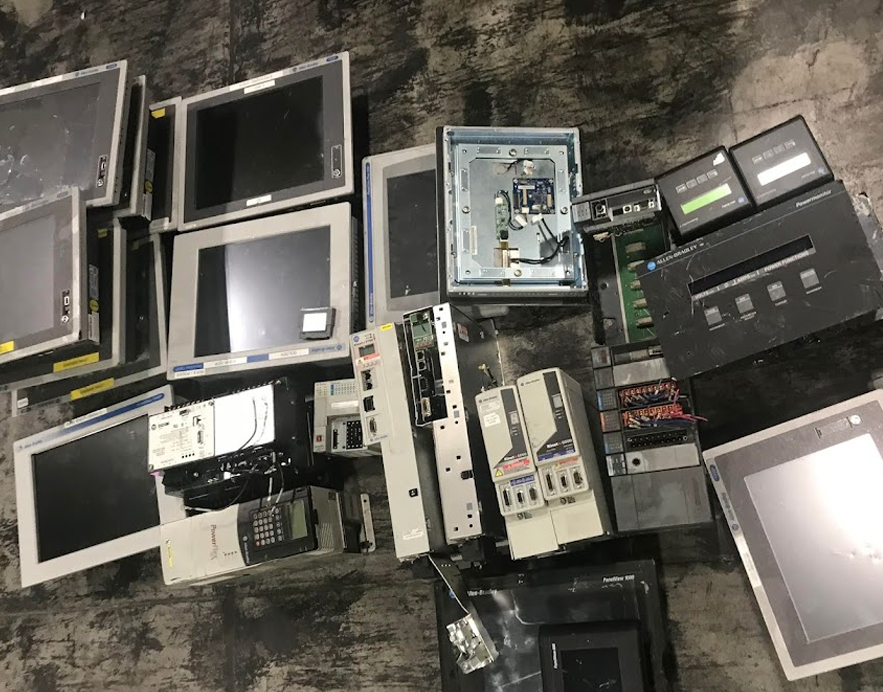
Quick comparison table
| Label you may see | What it usually means | Main buyer risk |
|---|---|---|
| New Surplus / Sealed / NOS | OEM package appears factory sealed; unused surplus | Age, storage, fake seals, no OEM warranty |
| New Open Box | Appears unused; OEM packaging opened or incomplete | Hidden install history, incomplete accessories, and possible prior runtime |
| Without Box / No Box | No original OEM packaging | Harder authenticity checks; cosmetic wear; it is easy to call a lightly used part "New - Without Box" |
| Seller / alternate packaging | Same as without box: no OEM box; ships in reseller packing | Easy to confuse with sealed OEM; same risks as without box |
| Refurbished | Restored or reconditioned to some degree; scope and standards vary widely by seller | Unknown process quality; aftermarket parts |
| Used with warranty | Previously installed; seller stands behind function | Prior runtime; warranty scope limits |
| Used / As Is | Pulled or auctioned; little or no guarantee | DOA, missing parts, unknown history |
| For Parts / Core | Not sold as working production hardware | May be beyond economical repair, or valuable boards and components may already have been harvested |
New Surplus / Sealed / New Old Stock
What buyers hope it means: never installed, still in Rockwell packaging, ready for the panel.
What it usually means in surplus: the seller believes the OEM packaging is factory sealed and the unit was not put into production. It may have sat in a warehouse for years. Date codes, old cardboard, and fading are normal.
Watch for: resealed label, wrong label fonts/spacing, low quality re-created packaging, and prices that undercut real surplus by a huge margin.
NJT framing: sealed surplus / new old stock is still pre-owned surplus. It is not sold as factory new.
New Open Box
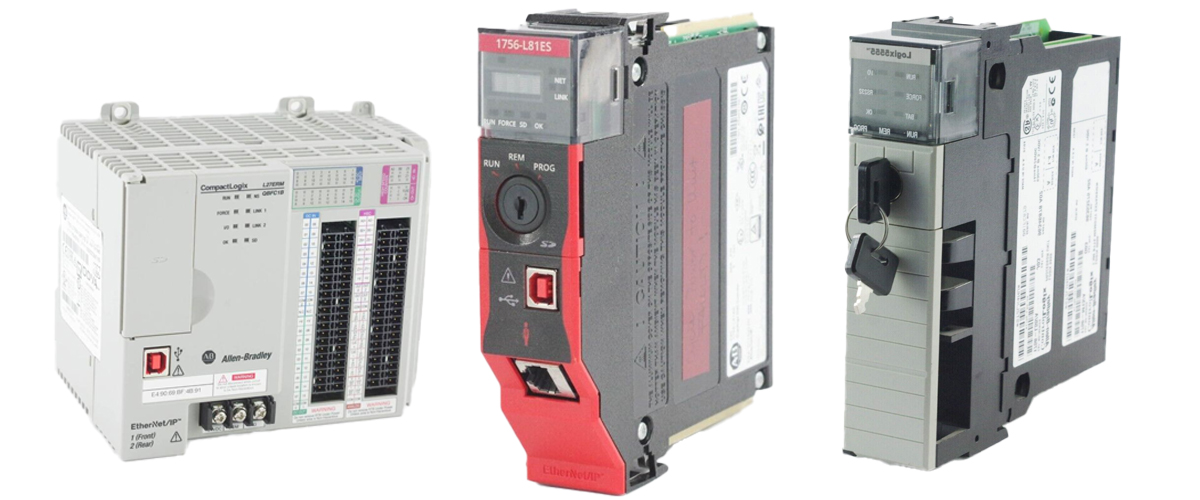
Open box usually means the seller thinks the hardware is unused, but the OEM package was opened, missing inserts, or incomplete. That can be legitimate plant-spare stock that was inspected and never installed.
It can also be a cleaned pull-out with screws, feet, and ports that tell a different story. Ask for close photos of mounting hardware, terminal blocks, overlays, and the data plate. If a seller calls every open box "New" with no nuance, treat the listing like used until proven otherwise.
Without Box / No Original Packaging
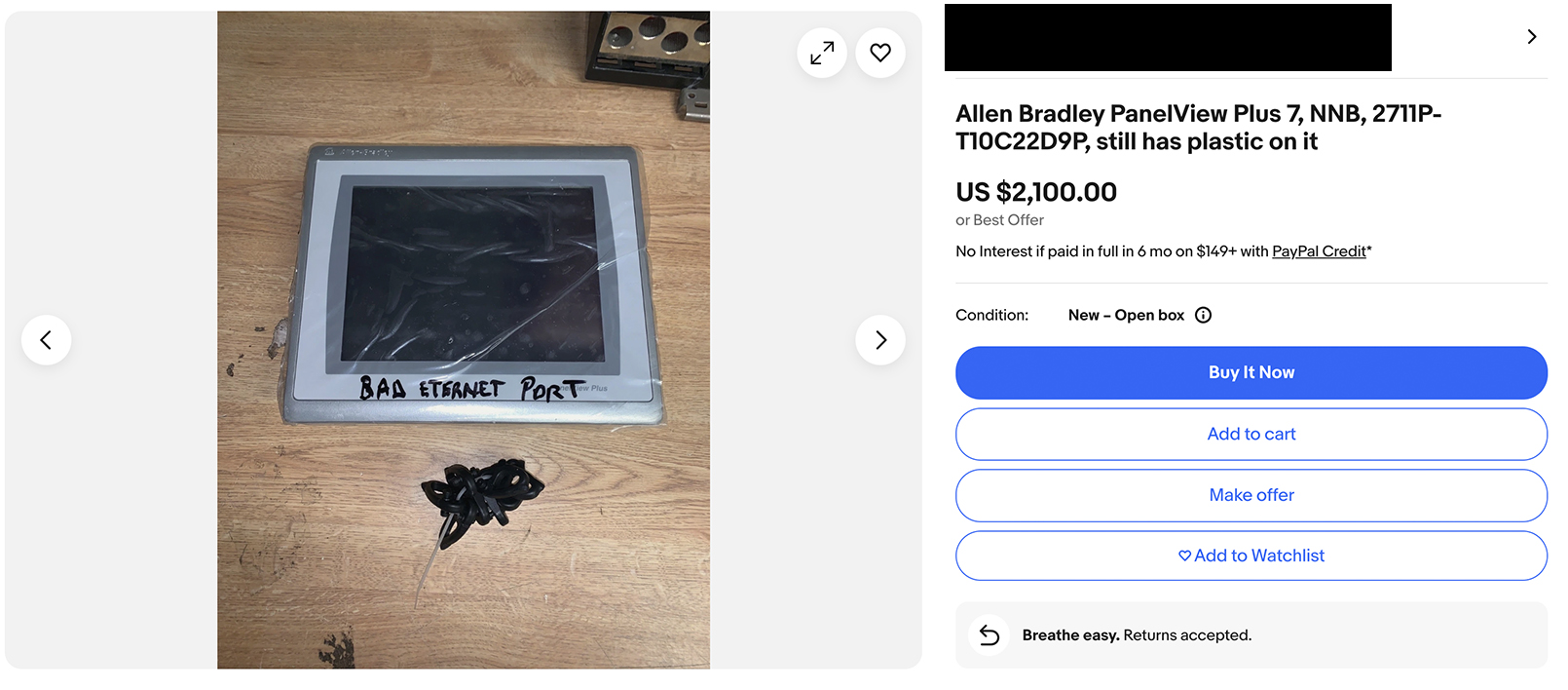
Without box (also "no box," "no packaging," or "missing original packaging") means the Rockwell box is gone. The module might still be unused surplus, or it might be a pull-out. You lose the packaging clues that help spot fakes and storage history. It is also easy for a seller to call a lightly used part "New - Without Box," so treat that label with extra skepticism unless photos and history support unused surplus.
Without box is not automatically a bad buy. It is a disclosure, and an honest "New Surplus - Without Box" listing tells you more than "Brand New" with a stock photo and no box in sight.
Seller packaging / company packaging
Seller packaging and alternate packaging are essentially the same situation as Without Box / No Original Packaging: there is no original Rockwell packaging with the unit. The part ships in the reseller's protective box or wrap so it can travel safely.
The company name on the outer packaging is not a condition grade. Treat these labels like without-box surplus: ask whether the hardware itself is unused, open-box, refurbished, or used, and do not assume a factory-sealed Rockwell package.
On our storefront you may also see New Surplus Alternate Packaging when a "new" style condition is paired with no-box or installed wording. That wording exists to stop "New" from implying a factory-sealed Rockwell box.
Refurbished (poorly standardized)
Refurbished is one of the least consistent words in industrial resale. It is not strongly defined across companies. One shop may wipe dust and power the unit on. Another may replace failure-prone parts, update firmware where appropriate, and burn in the repair under load. In practice, we have seen "refurbished" parts arrive in every condition: not working, heavily used, carefully rebuilt, and sometimes even new old stock.
Before you pay refurbished pricing, ask:
- What tests were run (power-on only vs functional checks)?
- Which parts were replaced, OEM or aftermarket?
- Were overlays, LCDs, capacitors, or fans changed?
- Is the work documented, and who did it?
- What exactly does the warranty cover and for how long?
A refurbished or repaired unit from a specialist who documents the work is generally more reliable than raw used surplus. Experienced technicians know the common failures for that model and replace those parts before the unit ships. A vague "refurbished" label with no process notes tells you nothing about what was actually done. For the repair-vs-buy decision, see repair vs replace.
Used with warranty
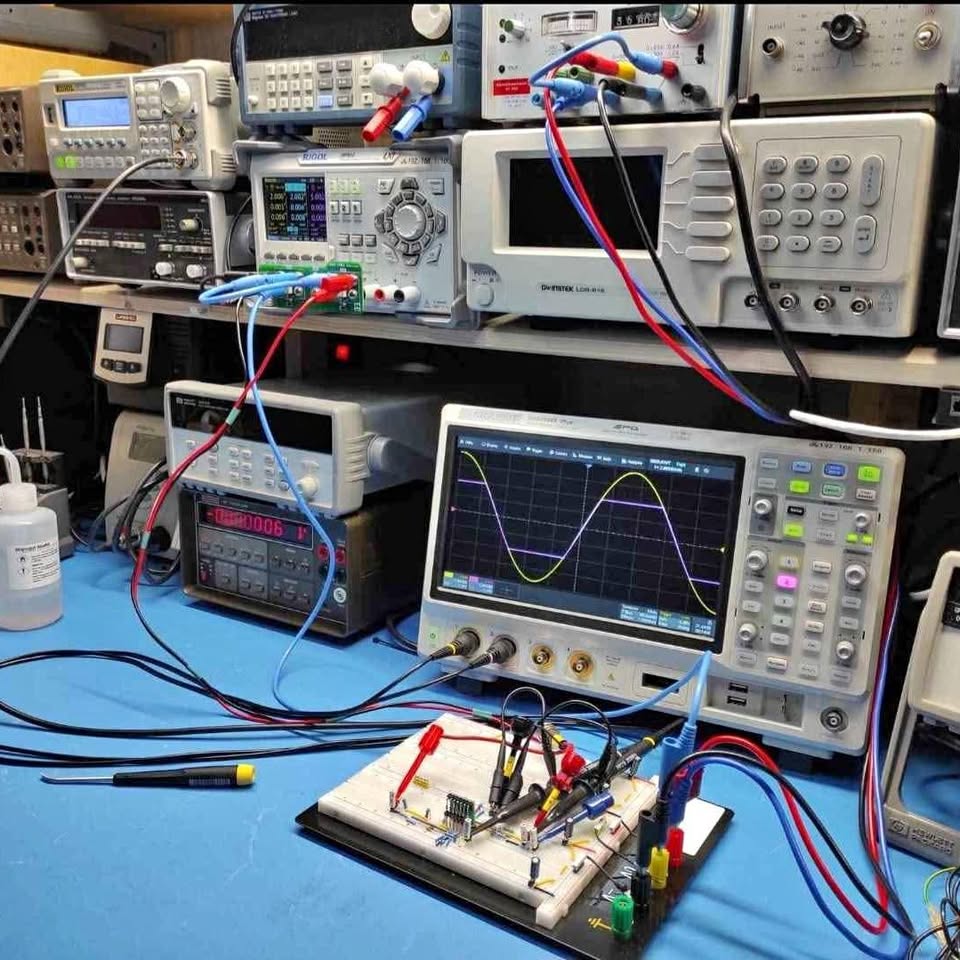
Used with warranty means the seller acknowledges prior installation or handling, and still takes responsibility if the unit fails under normal use within the stated term. For many plants that is a reasonable buy. The history is disclosed, and someone is still responsible if the unit fails.
Read the warranty. Some cover repair or replacement only, exclude misuse, and require return shipping. A short, clear warranty from a specialist is often worth more than a marketplace "returns accepted" badge from a seller you cannot reach.
Used as-is (common with auction houses)
As-is used inventory is common at auction houses and liquidation lots. Photos may be limited. Testing may be none. Titles can be incomplete. You are buying the physical object, not a promised outcome on your machine.
That channel is useful for rebuilders, hobbyists, and buyers hunting cores or hard-to-find units. It is a weak plan when a line is down and you need a known-good spare tomorrow. If you buy as-is, budget time for inspection, possible repair, and a backup plan.
For Parts / Core / Not Working
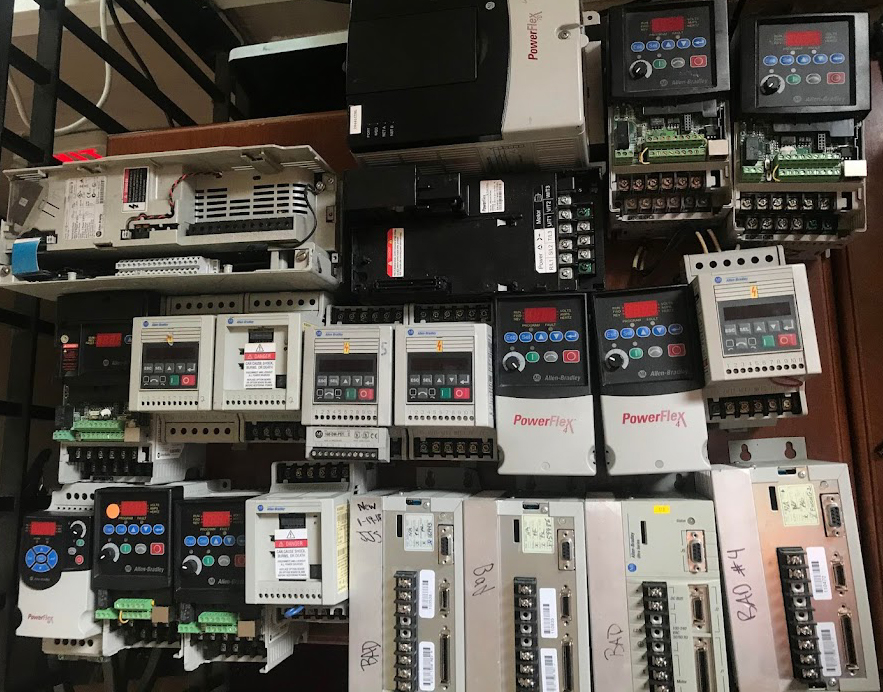
For Parts means the unit is not offered as a working production replacement. It may be incomplete, failed, water-damaged, or sold only for salvageable boards and hardware. On our site, for-parts listings are kept out of normal product browsing for that reason.
Never treat For Parts as a discounted "probably fine" spare. Buy it for repair projects and donor parts, or not at all.
Questions to ask before you buy
- Is this unused surplus, previously installed, refurbished, or for parts?
- Do you have the original OEM packaging, seller packaging only, or no box?
- Can I see photos of the actual serial plate, ports, screws, and packaging seals?
- What testing was performed, and can you describe pass/fail criteria?
- If refurbished, what was replaced, and were any aftermarket parts used?
- What warranty applies, who honors it, and what is excluded?
- Where does the item ship from, and does that match the listed location?
If a seller cannot answer those questions clearly, the condition label does not mean much. Either price that risk into what you pay, or buy from someone who documents condition the way you would want it written on the work order.
Frequently Asked Questions
Is factory-sealed Allen-Bradley stock ever truly "new"?
In the surplus market, even factory-sealed OEM packaging is usually treated as pre-owned surplus or new old stock, not factory-new from Rockwell. Seals age, boxes get warehoused for years, and OEM warranty typically does not transfer through resellers. Ask whether the seller means sealed OEM packaging or literally unused-from-factory with active OEM coverage.
What is the difference between "New Open Box" and "Without Box"?
New Open Box usually means the unit appears unused but the OEM packaging was opened or incomplete. Without Box (or no original packaging) means the OEM packaging is gone. The module may still look unused, but you lose packaging clues that help verify authenticity and storage history. Some sellers re-label both as New, which is misleading.
What does seller packaging or alternate packaging mean?
Seller packaging and alternate packaging are essentially the same as Without Box / No Original Packaging: there is no original Rockwell packaging. The part ships in the reseller's protective packing. That is not a condition grade by itself. Ask whether the unit is unused surplus, open-box, refurbished, or used, and do not assume a factory-sealed OEM package.
Why is Refurbished such a risky label?
Refurbished is not a single industry standard. One seller may only clean and power-test; another may replace overlays, capacitors, and backlights and run longer diagnostics. Always ask what was tested, what was replaced, whether aftermarket parts were used, and what warranty covers failures.
Should I buy "Used - As Is" from an auction house?
As-is auction lots can be useful for cores, spares, or rebuild projects, but they are a poor first choice for a production line that needs to run. Prefer used-with-warranty from a seller who tests and stands behind the unit when downtime is expensive.